Single Camera Theory
Single camera productions in TV, film and web series tend to stick to using only on camera in order to tell the story. However, some situations must rely on multiple cameras to gain the best coverage and angles. This could include scenes, which involve explosions or blowing things up, as there may only be a limited number of times the explosions can happen. Some other directors also like to use a second or third camera, which may not have the best angle, but is always there to help out the editor if needed. Some call this the 'safe shot', I recall watching a documentary which included a piece from Quentin Tarantino mentioning these extra cameras that some directors use and he didn't like to use them on his films. He only uses the one camera, as he planned the film shot for shot and that's what he sets out to achieve.

Formats in Dramatic Storytelling
In this essay, I will look at the different types of formats and explain what can separate one from another. I will also look at how they are all put together.
Serial Drama / Soap Opera
Serial Drama is basically a form of TV entertainment, where a story is carried over a series of episodes, giving more and more information towards the narrative as the program progresses until a finale at the end of the season. Soap Operas also fall into the 'Serial Drama' category, however they tend to not have a finale and will continue endlessly, such as Coronation Street, Hollyoaks or Eastenders. Soap Operas will usually go into much more detail and have lots of on-going stories within the story. Today, in the age of platforms such as Netflix and Amazon Prime, it is so easy to watch anything at the touch of a button. Serial Dramas allow people to immerse themselves in a story, which is on-going. Unlike a film, the audience can look forward to the next episode, chat with their friends about where they believe the story will go. Some series can last for 10+ episodes, which adds up to a large amount of time. The longer periods of time can allow audiences to become more connected with characters and events within a story, as there is more time to build character backstories and provide in-depth details of certain sections in the story.
Single Drama
Single Drama is the opposite of Serial Dramas. Single Drama is where the entire story
and narrative is told in one episode, which is normally not long enough to be a feature film
and will go straight to TV. These are done for a number of reasons, for one it's a chance for
a writer and creator to make something as a stand alone piece that has the potential to be
adapted into a full series. While Single Dramas were more popular in the past, the cultural norm has become watching of the episodes of a series in one go and there is a lot more money in it that way.

Realism
Realism is where the story is as realistic as it could be and the audience believe they are
watching something genuine, this is done through a multitude of techniques on all creative
sides which I will discuss later on. Realism in simple terms is just something that could
genuinely happen without 1000 questions as to how, an example of something that would
not be realism is Superman. An example of a film that does show realism is 'Warrior', which I recently watched. The film wasn't so much about fighting as it was the evolution and desperation between two brothers with completely different lives, the contrast made for an emotional, yet thrilling film and a brilliant final scene. It's in no way out of this world when it comes to reality and it is an incredibly plausible storyline with very believable performances. These kind of films generally rely on a much more emotional connection with the audience, instead of explosions every two minutes to keep the audience's attention. These types of films can still use CGI, but it's mainly used in little sections and rarely in your face to the extent of Non Realism.
Non Realism
Non realism is the use of themes, stories and also ideas that could not possibly happen in real life. People tend to enjoy these films because it takes them out their everyday lives into another world for a couple of hours. The films tend to be relatively heavy on the CGI, however some more so than others. CGI is done best when it's not even noticed at all and is just seen as part of the set and doesn't look like an 'effect'.

Non realism is the use of themes, stories and also ideas that could not possibly happen in real life. People tend to enjoy these films because it takes them out their everyday lives into another world for a couple of hours. The films tend to be relatively heavy on the CGI, however some more so than others. CGI is done best when it's not even noticed at all and is just seen as part of the set and doesn't look like an 'effect'.
Linear
A Linear narrative structure is one that follows a standard and cohesive plot which means that one scene flows into the next until the film ends and there won't necessarily be any kind of crazy flash backs to give you the crucial plot details. Each scene will be sequential with a few surprises of that kind. Films are usually laid out like this to make it easy for the audience to follow without having to pay a great deal of attention to the film. This kind of film can be great for younger audiences or viewers who just want something to watch without having to think too much.
A Linear narrative structure is one that follows a standard and cohesive plot which means that one scene flows into the next until the film ends and there won't necessarily be any kind of crazy flash backs to give you the crucial plot details. Each scene will be sequential with a few surprises of that kind. Films are usually laid out like this to make it easy for the audience to follow without having to pay a great deal of attention to the film. This kind of film can be great for younger audiences or viewers who just want something to watch without having to think too much.
Non Linear
Non linear storytelling is when the story is told in an unconventional way following an unusual
sequence, to the audience it may seem almost random however every scene is placed exactly
where the director wants it. When a story is told in a manor that is not chronological it requires
the audience to pay much more attention to the film since if you miss one scene you'll lose the
story. A non linear story can be much simpler than that, it doesn't have to be in a very jumbled up
order it can be something as simple as a flashback to reveal some of the characters backstory.
Technical Requirements
Technical aspect of single camera drama are how the director uses lighting, sound, editing and
their unique style is put into their work, I will explain some of these bellow:
Lighting
Most of the time when filming on a large production, the lighting can be however you want it to be, as the budget is probably a lot larger than the smaller productions. The lighting for a scene can be really important, as it can set the tone for the film or can be used to reflect a character's mood.
Most of the time when filming on a large production, the lighting can be however you want it to be, as the budget is probably a lot larger than the smaller productions. The lighting for a scene can be really important, as it can set the tone for the film or can be used to reflect a character's mood.

Sound
Sound design is another great tool used to create a mood/ ambiance in a scene and can be used by directors to help tell a story or reflect how character's are feeling. Here's a great scene from the film 'Her' which shows that sound can help tell a story on it's own, even without visual. Infact, there's something quite gripping and also unsettling at the same time about how the director has chosen to use the sound in this scene.

Sound design is another great tool used to create a mood/ ambiance in a scene and can be used by directors to help tell a story or reflect how character's are feeling. Here's a great scene from the film 'Her' which shows that sound can help tell a story on it's own, even without visual. Infact, there's something quite gripping and also unsettling at the same time about how the director has chosen to use the sound in this scene.
Ambient Sound
The reason ambient sound is used is to provide continuous audio throughout gaps that would have been silent. It is also great for creating an atmosphere within a scene and can grab the viewers imagination and pull them into a scenario, where it feels like theyre in the environment. The Revenent is a brilliant new film, which constantly uses great ambient sounds to make the story flow and the film become more immersive.
The reason ambient sound is used is to provide continuous audio throughout gaps that would have been silent. It is also great for creating an atmosphere within a scene and can grab the viewers imagination and pull them into a scenario, where it feels like theyre in the environment. The Revenent is a brilliant new film, which constantly uses great ambient sounds to make the story flow and the film become more immersive.
Dialogue
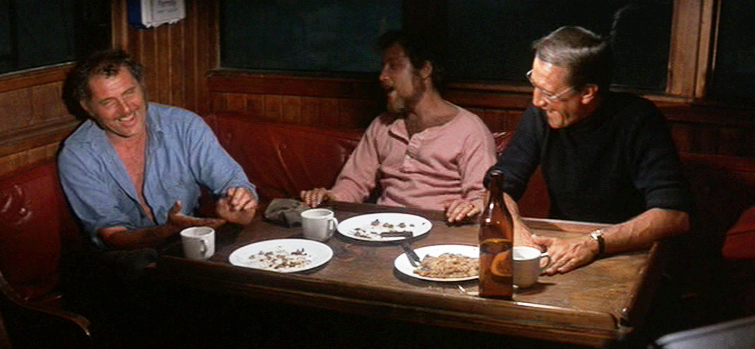
Dialogue in film is something that can be used to progress the movie forward
while simultaneously giving information about the characters and their backstory. When
done well dialogue can be subtle and clever but when done poorly it just becomes
exposition because it's the laziest way of revealing information.
Sound Track
I absolutely love soundtracks when done well in film, a good soundtrack will not only boost
the films popularity but help it stand the test of time. The Exorcist is now famous for it's
track used in the film as well as many other such as John Williams' input to Star Wars. A
good example of this I feel is in Chris Nolan's film Interstellar, the soundtrack for that
movie I think perfectly captures the emotion of exploration and nervousness during the
film. It has stood out as a soundtrack having many covers on youtube since it's such a
hard and respectable piece to play.
